“Mouth at the worm’s ear, Father said:
We have loved each other, dear Willie, but now, for reasons we cannot understand, that bond has been broken. But our bond can never be broken. As long as I live, you will always be with me, child.
Then let out a sob”
George Saunders, Lincoln in the Bardo (Random House, 2017)
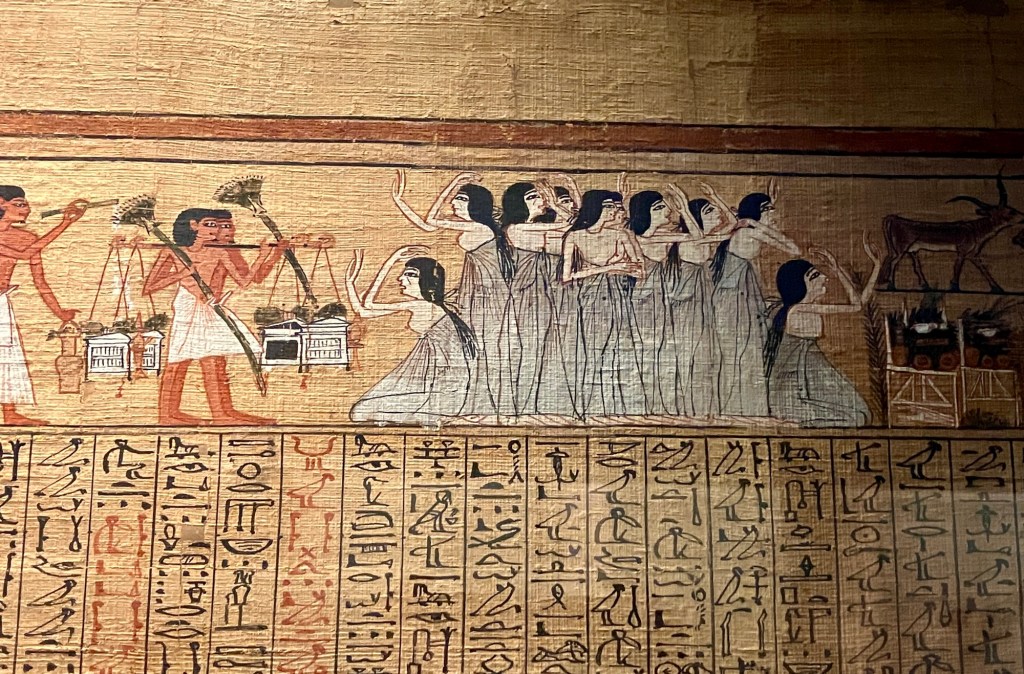
One of the best days I’ve had recently was a day in which I cried probably for about four hours in total. The day in question was Monday 12th February 2024; it involved a trip to the British Museum, a film from my childhood and a novel about the American Civil War. What brought all these experiences together was a thematic link, an emotive subject matter, namely the relationship between fathers and sons, and how this primal bond was (and in many ways continues to be) for thousands of years the fragile link for power structures to survive, dynasty to dynasty.
In the works to be discussed, that each represent fragments of history or mythology, this father-son bond has been destroyed or disrupted, by means other than the simple passing of time, and what connects them all (and what was emotive for me) was the devastation of this loss. Whether pharaoh or president of the United States, the loss of a child is a leveller, something we can all empathise with; but when this small and vulnerable child is the desperate difference between the thriving success or the end of a culture, a religion or a nation, the potency of the depiction of this relationship is mixed with the human feeling at its heart.
I was back in London for a few days, and I wanted to go to the British Museum to continue a research project I’ve been compiling for the last few years, investigating any trace I can find of a shadowy pharaoh of the Amarna period called Smenkhkare, a possible immediate predecessor and close relative of Tutankhamun. Though on the hunt for any reference to the Amarna period and Akhenaten in the collection, I wasn’t hopeful of finding anything as the real treasure haul is housed in Berlin; unearthed dubiously by German archaeologists instead of British. However, engaging with museum collections in the midst of current discourse surrounding repatriation, decolonisation and erasure is an important part of the research; I had to find out exactly what they had of my mysterious Smenkhkhare.
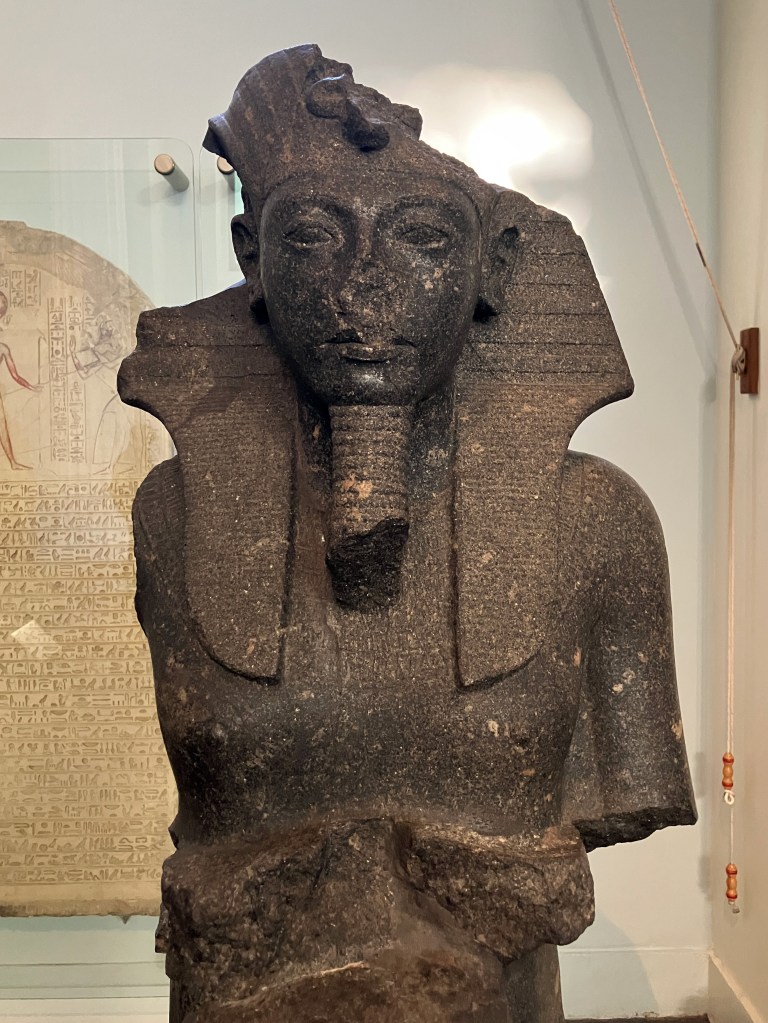
Scouring the great Egyptian sculpture hall, I soon found that the Amarna pharaohs were present through omission; visible through absence. A statue of Tutankhamun, recognisable by his youthful features, softer than Akhenaten’s but in the same distinctive style, had been later co-opted by General Horemheb who recast the figure as a representation of himself, after the young pharaoh’s demise; the cartouche had been scratched out and recarved. This was also the case for a sculpture of a lion, taken over by a Ramesses of a following dynasty; Tutankhamun’s name chiselled out. A large stone carving naming in hieroglyphs all the pharaohs and dynasties from the beginning of Ancient Egyptian civilisation had two conspicuous absences: the Amarna pharaohs (Akhenaten, Smenkhkare, Tutankhamen and Ay) and Hatshepsut, the female pharaoh. Noticeable through gaps, leaving traces in stone, names erased and artworks reused by enterprising usurpers, using the beauty of those heretics for themselves and their own regimes; these precious traces, in a different way than a whole museum of successful artworks, made this small pocket of ancient time, its stories and its bodies, all the more compelling.
Akhenaten and the other Amarna pharaohs continued to be conspicuous by their absence, though in a different way, as I then came across a label for an interesting object not currently on display. It was an empty space where usually there sat a golden signet ring probably belonging to Akhenaten, depicting the pharaoh as a child-king; this symbolically represented eternal renewal of power and tradition in a long line of a father-son dynasty, and the supernatural god-like immortality of the pharaoh. Passing on one’s power and legacy to one’s son, one achieved immortality, living forever through a bloodline that changed little from generation to generation. Ironically, and genetically, this is what led to the demise of the Akhenaten line. However, there’s some evidence that the reason for Akhenaten’s extreme religious shift to monotheism was a way of paying respect and sending love to his own father, Amenhotep III, who was intimately connected with the Aten in his own iconography. So, this ring of Akhenaten as well as his extreme religious zeal are possible reflections of some kind of love of a son towards his father; and by extension, towards himself.

Getting back into the ‘An Ancient Face’ project gave me a hankering to watch The Prince of Egypt, which I hadn’t seen since I was a child. I wanted to see how much Amarna aesthetic had made it in to the animation. I would say quite a lot; all the main characters have pouting Akhenaten style lips and the Queen has an elongated Nefertiti neck. The regal Ancient Egyptian characters are depicted with a smooth bronzed glamour that is incredibly seductive. And there is an image of the actual Aten sun-disc which clinches it. What surprised me more, aside from the Amarna aesthetic, is how much I cried; I wept through the whole film. I must have been taken over by nostalgia, watching the film at my grandparents’ house after getting the tape out of Blockbusters, being traumatised by the horrific plagues of frogs and pestilential boils, that still send a shiver down the spine. It was an enjoyable kind of crying, tears spilling out like turning on a tap, without any real devastation, a kind of shadow reflex. I also especially loved the always excellent and despotic Ralph Fiennes’ pharaoh, clinging on to the familiar rituals and regimes as they crumble under him. Despite the identification the film foregrounds with the Hebrew slaves, this antagonist character is never painted solely as a villain, but with shades of complex love and fear.

Sigmund Freud obviously, famously posed the theory in Moses and Monotheism (1939) that the Moses myth was inherently related to the heretic pharaohs of the Amarna period. He posited that the original Moses (Moses itself being an Egyptian name, such as Ramoses and Thutmoses, meaning ‘child of’) was in fact a high priest or official of the Aten religion, that, after the death of Akhenaten and the recantation of Tutankhamen, fled Amarna and joined the tribe of Hebrews as their spiritual leader, in order to continue preaching the monotheistic Aten religion. Freud posits many theories involving the relationship between a leader to his people and the nature of cultural development to subconscious inclinations, as a father-son dynamic, ultimately ending with the son’s rebellion and killing of his father. The violence of change is inevitable. In The Prince of Egypt, Moses has a troubled relationship with his adopted father, the Pharaoh, and then encounters God, who is presented as a ‘real’ or chosen father who supersedes all other fleshly relationships. Moses then becomes a father figure or protector to his people that he himself has adopted.
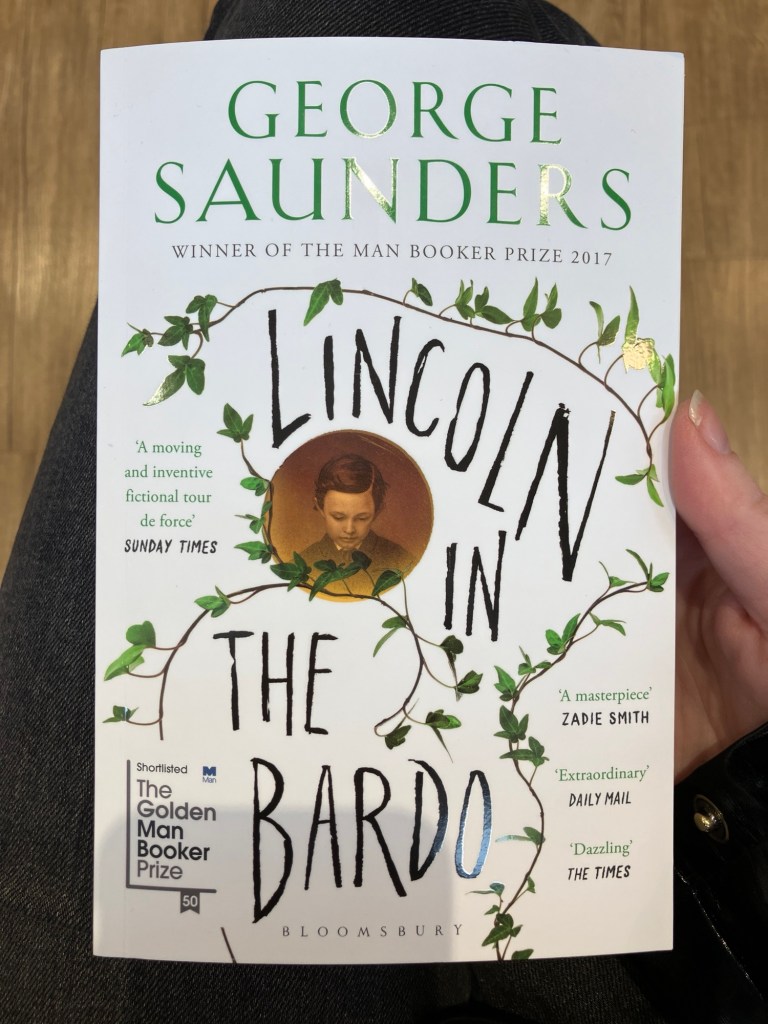
I had also, only the previous night, started reading Lincoln in the Bardo (2017) by George Saunders which my friend had lent me. It came at me hard after weeping like a broken tap watching The Prince of Egypt; the story is told lightly and imaginatively with lots of enigmatic space around the core events. It takes place in a crypt, the principal characters turn out to be the spirits housed there, bickering amongst themselves as they exist in a shadowy purgatory, when Willie, the 11 year old son of Abraham Lincoln is interred following a short illness. The American Civil War is raging on in the background and Lincoln is absolutely broken by the loss, returning several times to the crypt to hold his dead child’s body. This small historical footnote, the fact of Lincoln’s son’s premature death, is expanded into a richly surreal netherworld, bodily and ghostly forms bleeding together, elastic transformations, featuring a fantastic cast of characters.
It was a really interesting read in terms of the story’s structure as well as the emotive subject matter; incredibly inventive, using different styles of language for each ghost in the crypt, depending on the historical era they lived, and what kind of class, education, and prejudices they had. These personal, diaristic monologues of each spirit fighting to tell its story is punctuated by short chapters in an epistolary style, describing what happened at the White House during the time of Willie Lincoln’s illness and death. These interludes use only quotes from primary sources and the books that have collated them, and only a few short sentences from each as the constructor of the narrative rapidly lifts out the parts of the story they want, collaging together a new version. This was very effective, and moving, as again, similar to the ghosts’ polyphonous chorus, the effect is many different voices from various individuals describing urgently their little piece of what happened to this boy, and this war he died in the middle of. These contextual chapters describe in turns a lavish ball thrown by the Lincolns at the White House, Lincoln’s physical appearance and character, and the public fury and grief caused by the bloody battles between the North and South.
This patchwork collage of fact, opinion and observation was really interesting to me, as it suggests a possible form for my ‘An Ancient Face’ work, whatever that ends up being. I could knit together any references to Smenkhkare/Tutankhaten, whoever this young prince is, from the various museum, art history and Egyptology texts I’ve been collating. I wonder what kind of narrative would emerge, and if this technique could then get across some of the power of the human relationships at the core of the great Amarna art and age that has so affected me; like it managed to get across the devastating grief of Lincoln losing his son. From one father and son, to another, power passing down dynasties, building nations, and being ultimately broken by the frailty of small minds and mortal bodies.
 Sertraline Dreams