“‘Mi bella Princesa, your funny little dwarf will never dance again. It is a pity, for he is so ugly that he might have made the King smile.’
‘But why will he not dance again?’ asked the Infanta, laughing.
‘Because his heart is broken,’ answered the Chamberlain.
And the Infanta frowned, and her dainty rose-leaf lips curled in pretty disdain. ‘For the future, let those who come to play with me have no hearts,’ she cried, and she ran out into the garden.”
Oscar Wilde, ‘The Birthday of the Infanta’ from A House of Pomegranates (1891)
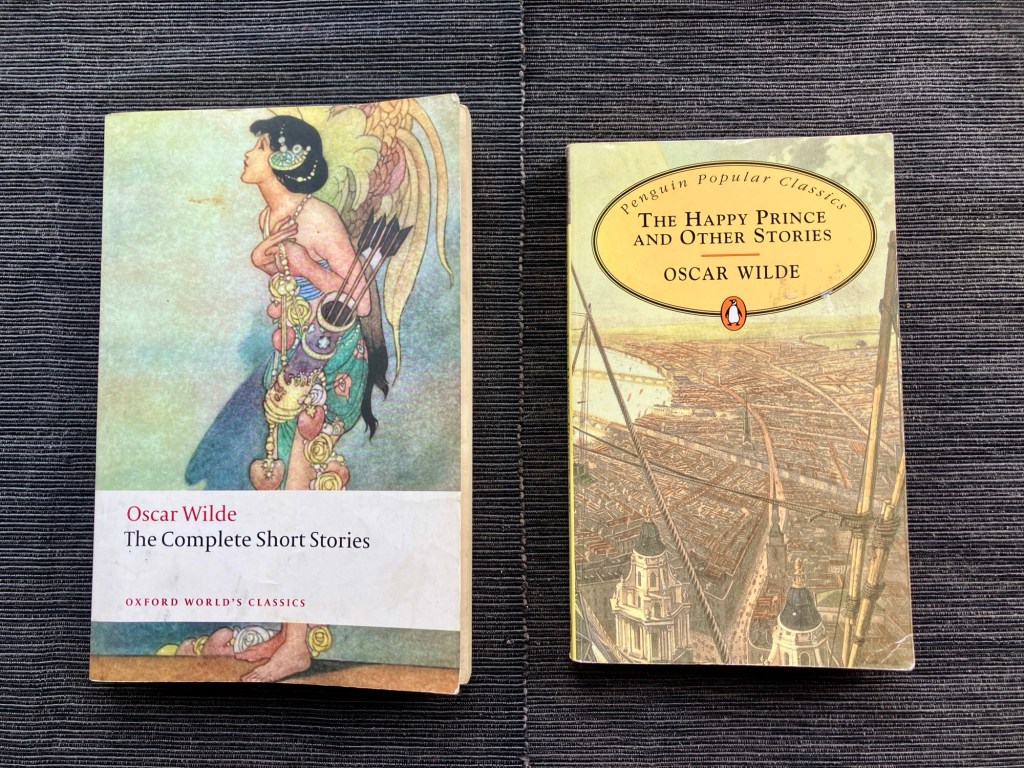
This is probably one of the most deeply personal blog posts I’ve ever written. That may suggest salacious details but I am sorry to disappoint already; the intimate nature of this piece of writing will most likely not be immediately obvious to anyone else. I’ve been reflecting recently on a short story that has been a formative part of my psyche since my childhood, that rears its head in my conscious thoughts every couple of years, usually when I am going through some kind of unsuccessful or unfortunate relationship, or in some way considering my position to those around me, and through them my relation to reality, outside of my fantasy world. Whenever I am confronted with the Traumatic Real, in other words, I think of the Dwarf and the Infanta.
To go back to the beginning … the subject of this post is the short story by Oscar Wilde, ostensibly for the edification of children, written as part of an anthology called The House of Pomegranates which was first published in 1891. It is a terrific example of the Decadent movement, the Aesthetic, the luxurious cruelty so typical of the rich imagery of his writing. Cruelty is prominent in the world of ‘The Birthday of the Infanta’; animals are tortured to perform as entertainment for the party; children are bought and sold; bare-foot heretics are led to the pyre. In many of Wilde’s stories for children, cruelty is equally ubiquitous, stories that are characterised by the immense suffering of innocents, in a heady excess reminiscent of the Marquis de Sade’s own form of inverted fairy tales. Though less sexually explicit than Sade, Wilde’s short stories for children are brutal in depicting emotional trauma; what Sade does to the body, Wilde does to the heart.
‘The Birthday of the Infanta’ is available to read online, either the full version or a synopsis (this link provides both). If you are reading this, you should probably read the full story if you haven’t already, it isn’t long, and I hope you are as psychologically damaged by it as I was.
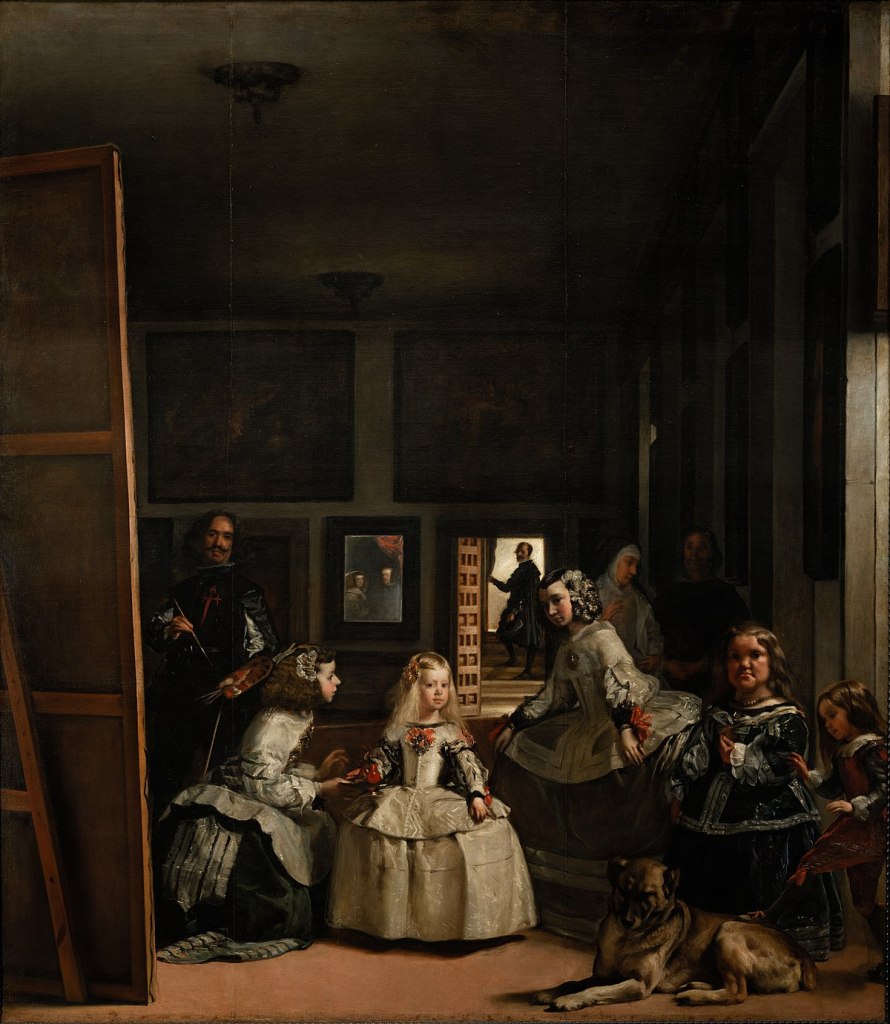
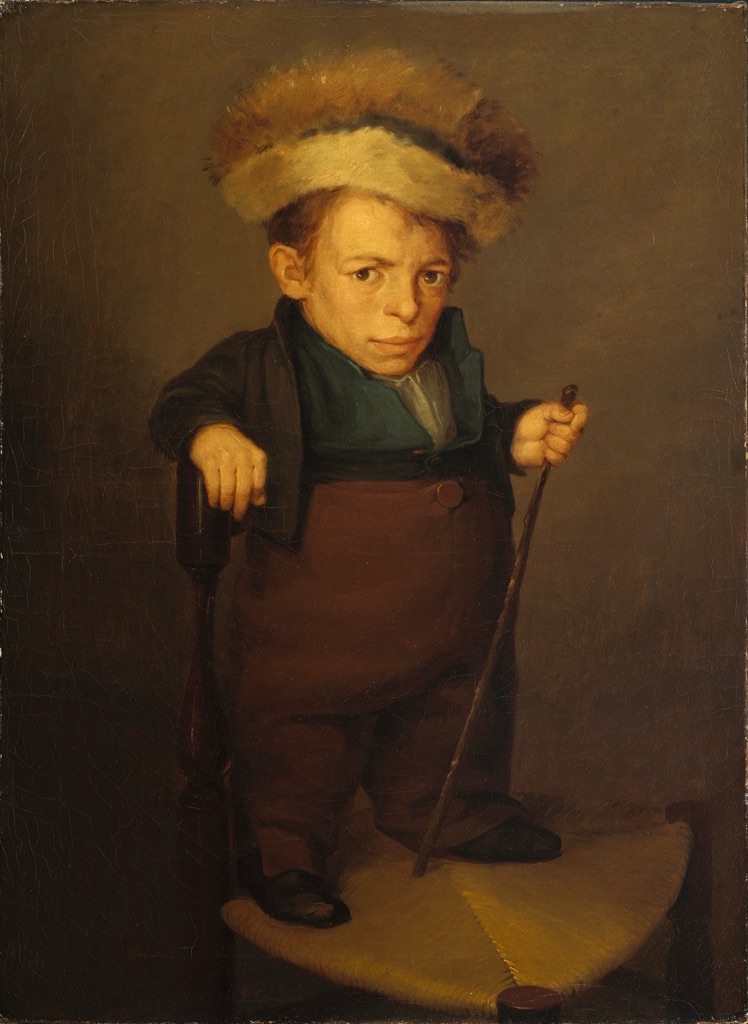
To be brief, the narrative takes place during the height of power of the Hapsburg court in 17th century Spain, inspired by Velazquez’s portraits of the princesses and kings of Spain; it depicts the birthday of the 12-year-old Infanta, and all the delightful amusements that have been put on to entertain her and her friends, the children of courtiers and nobility. One of these entertainments is a little dwarf, found in the forest, who dances for the princess and falls in love with her. He sees her laughing and she throws a rose at him, and he takes this as meaning she loves him as well. She wants him to dance for her again, so he goes into the palace after the show to try and find her. While he is looking through all the grand empty rooms, he finds a hall of mirrors, and after not understanding what he is seeing, finally has the horrible realisation that the misshapen, freakish, unspeakably ugly creature he has stumbled across is himself. He then realises that the Infanta was laughing at him, not with him, as she could never love a creature such as him. Collapsing, he dies of a broken heart, and the Infanta, unmoved, runs into the garden to continue her birthday celebrations.
I, as an adult, have developed two ways of looking at myself in the world. Sometimes I feel myself to be the Dwarf, sometimes I feel I have a side of me with the potential of being the Infanta. The Infanta side of me I see more as an idealised version, someone I can work towards embodying, not necessarily embodying the cruelty and corruption of the fictional character. The horrible moment of the Dwarf realising he is looking at his own reflection in the mirror, and understanding finally that the Infanta loving him was only a delusion, that she was actually laughing at him, still produces a hot feeling of understanding in my chest; it is a moment in literature that I took deep inside myself, at an early age. Indeed, whenever I brush up against the Real, and have to deal with brutal truths and rejections, I think of myself as the Dwarf, as his internal world is swallowed up by a crushing reality.
As I said in a previous blog post, ‘On Pervy Old Men Part 2′, paraphrasing Lacan, declaring love can be characterised as ‘giving something one doesn’t have, to someone who doesn’t want it.’ The trauma of love is about coming into contact with the Real; we might think we live a beautiful life in the forest, but we may one day see ourselves through someone else’s eyes and realise we are not being celebrated, we are being exploited and humiliated. The flowers are disgusted by our ugliness, and those we love see only how we can amuse them. In terms of growing up, these are experiences we all go through in one way or another, especially in terms of early sexual relationships and attractions. Hopefully these life events lead to channelling the high self-regard of the Infanta and finding those people who do love and respect us, becoming well-rounded, psychologically healthy adults. Or it can lead to falling down and dying of a broken heart, identifying as a freak who will never be loved, and being stuck in a traumatising cycle of loving those who will never love us back, the uninterested and unavailable.
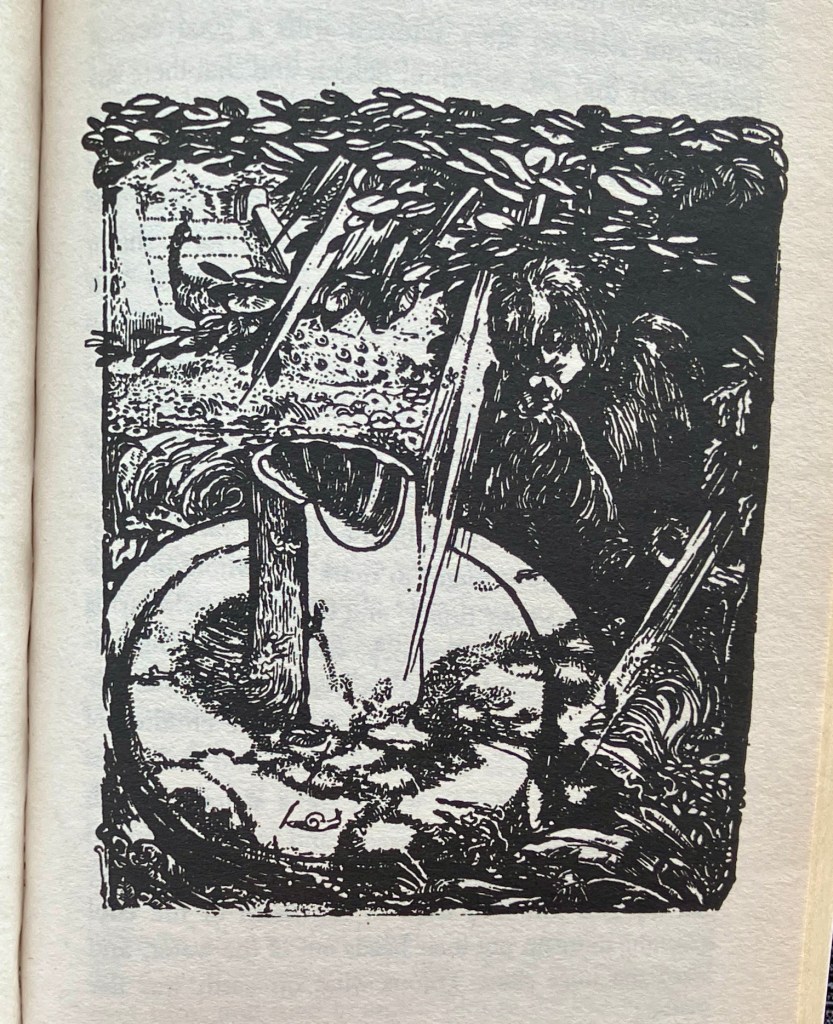
The young Dwarf is much abused by the characters in the story for his ugliness, but he is not really ugly at all; he has, in fact, a better life more filled with love and happiness than the Infanta, whose world is lonely, neglectful and tedious. The Dwarf is loved by birds, and the creatures of the forest; the Infanta is superficially admired by many but really loved by no one, not even her father the King of Spain, who can’t bring himself to look at her. Part of the tragedy of the story is that none of the characters in the story, especially not the little Dwarf who dies of a broken heart, can appreciate this.
However, it would be a much weaker story without the brutal cruelty of Wilde’s denouement. I doubt I would have thought of the story ever again if it had ended any other way. Because, while in reality and within our own lives and journeys of growth, we can learn to respect ourselves and create for ourselves a beautiful and fulfilling life, building up our self-worth and resilience, it is still also true that other people that we encounter across our lives do have the power to crush us, break our hearts, and shatter our self-image. It happens all the time, and it is not unusual. The world itself often doesn’t care either how kind, generous, loving we are, no matter how essential these characteristics are, nevertheless, to living a good and authentic life. Beauty can be still be misleading, glamour a deception, and fantasy can submerge our reason; the awareness of this doesn’t stop the potency of these kinds of beauty, and our willingness to fall into its trap. However, being aware of depth and superficiality in the existences of the Dwarf and the Infanta go some way to suggest strategies of situating oneself in the external world, and what kind of person to be, while still bluntly portraying the cruelty and brutality of that world.
 Sertraline Dreams