“In Our Fatal Magic, it is the wound or cut that produces the portal that enables the double movement between becoming and unbecoming.”
Bridget Crone, ‘Wounds of Unbecoming’, introduction to Our Fatal Magic by Tai Shani (Strange Attractor Press, 2019)

This article should be more properly called ‘On Tai Shani’s Our Fatal Magic’, as it is this book by this artist that I am going to talk about, as artists’ books are such interesting things and this one especially brilliant, but I like to confound the bots and make my work un-Googleable (possibly an unhelpful impulse). Also I wanted to stuff in as many Phantasmagoregasms as possible.
Before we talk about Our Fatal Magic, we should go back to the beginning. I was lucky enough to visit Tai Shani’s 2018 Glasgow International exhibition Dark Continent: SEMIRAMIS. This large-scale installation and performance series took place at Tramway in April and May 2018, five months before I moved to London. As far as I recall, every day of the exhibition there was a scheduled spoken word performance inside the installation (or perhaps it was a recording) forming a series which would eventually be published as Our Fatal Magic; twelve narrators, twelve chapters.
The exhibition and performance that I saw in May 2018 had a profound effect on me; I’d never seen anything like it, though it felt familiar. There were references to creatures, tropes and characters I knew well, but reconstructed as something new to aim towards. Though Shani’s work is very different to my own practice, and what I want my work to be, there was a similar sense of scale, imagination, ambition in the type of imagery or world that was being described; particularly in the curiously oppressive texts that were dense with sensory information and emotion; like being weighed down in a dream.

The experience of being read to while sitting on the floor in a dark, warm room takes the mind’s eye to a powerful place; I felt like I had been hypnotised, and I emerged with only one or two real images that stuck with me, like scenes from a nightmare; the detail of what actually happened in the story faded away. It was a situation that reminded me of watching Beyond the Black Rainbow (readers of this blog will know I refer to this film in every third post), in that it took place hovering around the edges of full consciousness; when I got the chance to read the book This Fatal Magic, I was hesitant to do so; it felt like turning on the house lights at a nightclub. Do you really want to see the black and white reality from which emerged such a strange experience? Will that unmasking remove the memory’s power, retroactively?
The chapter that I saw performed at the GI exhibition was called ‘Phantasmagoregasm’. The eponymous narrator in this chapter is a writer of Gothic fiction who permeates their own stories as a sinister force, in this case as an evil house reminiscent of Poe’s The Fall of the House of Usher. In other chapters that I have since read, there is a tendency to more abstract narratives, which involves a persistent use of words like ‘indescribable’, ‘impossible’, ‘beyond language’, ‘unknowable’; the repetition of these can quickly become meaningless and I got a little fed up with this kind of nothingness. I’m not a spiritual person. However, this chapter ‘Phantasmagoregasm’, after reading the other eleven, does stand out from the others as having the strongest narrative framework, individual named characters, even describing the layout of the house where the action takes place. Despite the varying levels of abstraction, each narration of the DC: Semiramis exhibition which would then become a chapter in Our Fatal Magic builds up through their collective voice, one after the other, accumulating detail of their world, ultimately layering together an environment that the installation and objects of the exhibition had previously achieved aesthetically or spatially rather than through narrative.
“In this forever dusk, I am the eye and I am the vision. In this city at the edge of time, I am the flesh and I am the touch.”
Shani, ibid. From ‘Woman at the Edge of Time’
This idea of a neat set of twelve immediately captivates me; twelve disciples of Christ, twelve months of the year … it provokes an urge in me like my childhood obsession with collecting Disney Princess dolls. Aside from Phantasmagoregasm, my first and favourite, the other eleven narrators take varying forms, from inanimate objects to archetypes of femaleness. My other preferred narrators include the Cube of Flesh (a chapter whose violence made me nauseous, in a way that I loved), the Teenager, and the Hermaphrodite Neanderthal. The Medieval Mystic I was more comfortable with than Mnemesoid the AI software programme. I don’t really know what things like ‘open source’ or ‘interface’ really mean, it just sounds like more arcane language to me. These technological references did bring a timeless space-age sci-fi quality to proceedings that brought a cooler, slicker dimension to the whole, contrasting spicily with the earthier scenes of medieval mysticism, primitive bodies and fairytale violence.
“Just below the left breast is a large open wound, carved by the spear of destiny. A gash. The beatific smile of a little mouth. A dark, softly parted little mouth. Wet and cublike. The mouth of a baby animal.”
Shani, ibid. From ‘The Medieval Mystic’
The moments of intense, ecstatic ultra-bodily pain and eroticism, expressed by the Vampire or the Medieval Mystic, are then frequently interrupted by a lens clicking, capturing images for a mysterious insatiable data centre. It feels like such an intrusion; at least ‘I’ can own my own pain and my experiences are mine, I can own being eaten alive by wild dogs or fucking an octopus, whatever it is the little vignettes of indescribable experience have collected. It’s a strange intrusion, an odd dance; like thinking you are alone in your room and then the horror of realising a stranger is in there with you; who is performing and for what?
The uncanny horror is supported from below by a structure of dream logic, dream repetition, that knowledge or certainty that comes with dreams that is internal. Inside a dream, you know things about the scene before you from a deeper place even if on the surface they don’t appear that way; you know a person is really your mother for example even if they take a different person’s outer form; you know a place is a certain place, that you are home or that there is something terrifying behind you, without sensory information. These certainties contrasting with endless unknowabilities take the reader into a supersensory dream structure where they become submissive and pliable, and thus more able to expand into the new spaces and transformations that the twelve Narrators cut, rend and tear into existence.
I’ve been reading recently about Jung’s theory of Archetypes: symbolic images from the collective unconscious, the early inherited dream of a culture. The twelve Narrators all represent the idea of an archetype, disrupted by their esoteric and arcane identities that Jung probably wouldn’t recognise. They are subverted Archetypes, almost familiar, almost already inside us. We know elements of them, when taken apart and cleaned up: Sacred Woman, Dead Virgin, Pregnant Animal. They are a kind of sci-fi, Neo-Archetype, that like AI takes forms we are familiar with but expresses them as churned up and reconstituted, and alien.
“It is a place where perishable, banal bodies and incomprehensible, divine bodies touch in an immutable embrace; a long kiss, deoxygenated and marine, dispelled and star-like. They coalesce in the uniformity of space-time weave without imposed linearities that only momentarily appease the anxious observance of this limited sentience, of this sack of skin full of gore. These bodies that we love so much, and lose so much in.”
Shani, ibid. From ‘Paradise’
Cutting and wounding, either self-inflicted or not, is a prominent motif throughout each chapter, as described in Bridget Crone’s introduction to the book. The image of the wounded flesh constantly contrasts the body and blood with sci-fi cityscapes, data collecting and AI. As the reader at the very least, we are trapped in our bodies and as technology is man-made, including fictional technology, it will always come back to a fixation on the body from something that can’t comprehend a fleshy existence. As we ourselves can never truly comprehend a fleshless existence, we’ve created something that has a preoccupation on the unknowability of the visceral emotion, pain and love that accompanies a mortal, human existence. Like a Venn diagram, both sides meet in the middle, in a kiss.
I feel lonely in the art world a lot of the time. This epic world (“Just like you, I once was epic …”), contained in this small volume, makes me feel less alone. It describes something close, but not identical. The book, and its twelve chapters, is a bespoke form for the larger project, a unique structure; the book is like a carefully moulded case to fit a special piece of jewellery. It fits exactly right. A lot of what I find satisfying about the work is to see an artist creating, through experimental writing, such a perfect structure to support the delicate imaginative project, instead of finding another pre-existing structure like a hermit crab.
“On a plinth is a finely detailed brass statue of Medusa the Gorgon, a thick python coiled from her skull wrapped around her neck, strangling her; her garnet eyes rolled back, her mouth open in agony, ecstasy, it falls in silent slow motion and spills liquid onto the floor, quivering. A puddle of quicksilver.”
Shani, ibid. From ‘Phantasmagoregasm’
I borrowed Our Fatal Magic from a friend, and copied out the passages I liked instead of underlining them as I normally would with my own books. So I apologise if any parts are slightly misquoted through writing and re-writing. I’ve since tried to buy my own copy twice, and both times the online bookseller takes the payment and then, when the bookshop employee actually goes to look for the elusive title, it turns out not to exist and I get refunded three weeks later. So the search continues! Maybe it will be third time lucky.
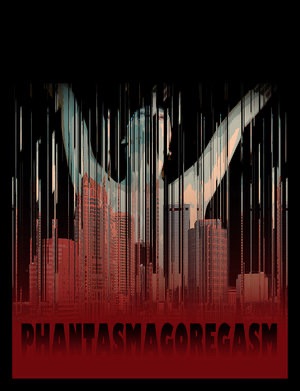
Further reading: the Phantasmagoregasm page on Tai Shani’s website
 Sertraline Dreams