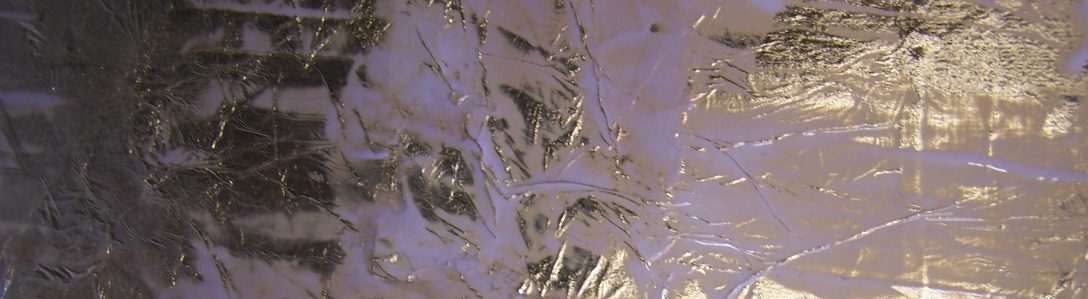
“Hare hare god send thee care, I am in a hare’s likeness now, but I shall be a woman even now, hare hare god send thee care.”
Extract from Isobel Gowdie’s third confession, 1662
I’ve just arrived in Germany, on my way to Kebbel-Villa’s International Künstlerhaus located in the lovely Bavarian town of Schwandorf, where I’ll be working as an artist-in-residence for the next few weeks. I flew from London Heathrow into Nuremberg, more specifically into the Albrecht Dürer Flughafen, which begs the question: how many airports are named after visual artists? Albrecht might be one of the one*, and it’s an especially excellent name because Albrecht was a late medieval painter who would have absolutely no conception of such things as airports or planes. However, as an innovator in engraving, self-portraiture and the printing press, he would be on board I’m sure.
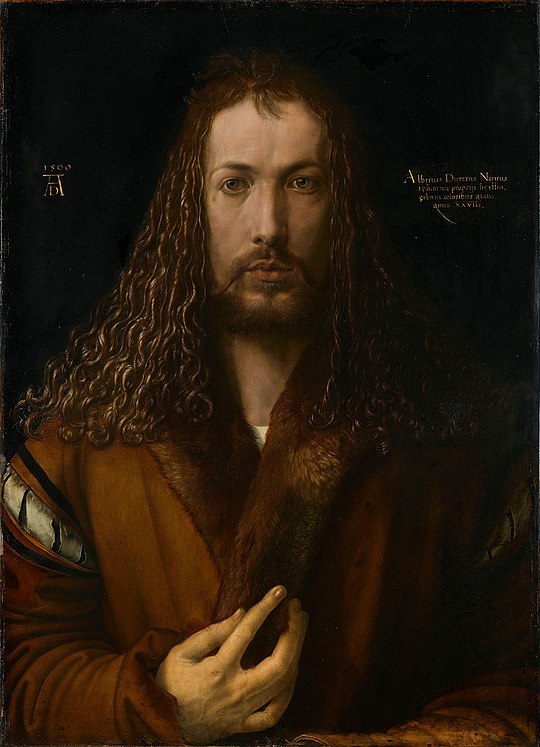
Like most people, Albrecht D has always low-key been on my radar; there was a print of Dürer’s Self Portrait at 28 (1500) hanging up in my family home for as long as I can remember. I’m pretty sure Ikea sold prints of his work, same as they did/do with Gustav Klimt, which is probably where we bought ours. More recently I also gifted my parents a print of a psychologically complex lion that I bought from the National Gallery, where his landscapes were showing in an exhibition there in 2021. When I was learning printmaking at the GSA, I gained a new appreciation for his intricate and beautiful engraving work, that was head and shoulders above all others of his time, and remain some of the best etchings ever made. His obscene talent was paired with a rather camp sensibility, a little pompous, that is quite endearing and I think contributes to his lasting appeal.

So, before leaving Nuremberg and heading on to Schwandorf by train, I made a little pilgrimage to see the resting place of old Albrecht, one of the all-time greats, prince of the Northern Renaissance. Built outside the city walls in the 13th century but these days very much in the heart of the modern city of Nuremberg, this graveyard was stylistically unique; flower-filled and perfectly maintained with gardeners in waistcoats patrolling the aisles. Laid out in a grid, there were lines and lines of centuries-old tombstones leading towards the small red church at the far side, so closely packed I had to abandon my heavy suitcase by the path, in order to achieve the agility required to inspect the German names in gothic lettering, looking for Dürer. It took me quite a while to find the right gravestone, as all the tombs were variations on the same theme of stone, bright flowers and timeworn metal plaques of intricate text.

In the end I spotted his iconic signature, and so, successfully accomplishing the mission, I stood by his tomb for a few minutes and paid my respects. It was all very quiet, and I was dreaming cloudily of all the Dürer work I had appreciated before, when I turned back around to where I’d left my suitcase, and my eye was suddenly caught by a strange movement. An animal of some kind was bounding lithely between the graves; the wrong colour for a fox, the wrong shape for a cat or a dog, too big and leggy to be a rat or rabbit. I waited, motionless, for it to move again, in hope of getting a better look; it was the height of the afternoon in the middle of a city; what wild animals are up and about in such a context? It was an eery feeling that accompanied the realisation that the mystery animal was a hare.
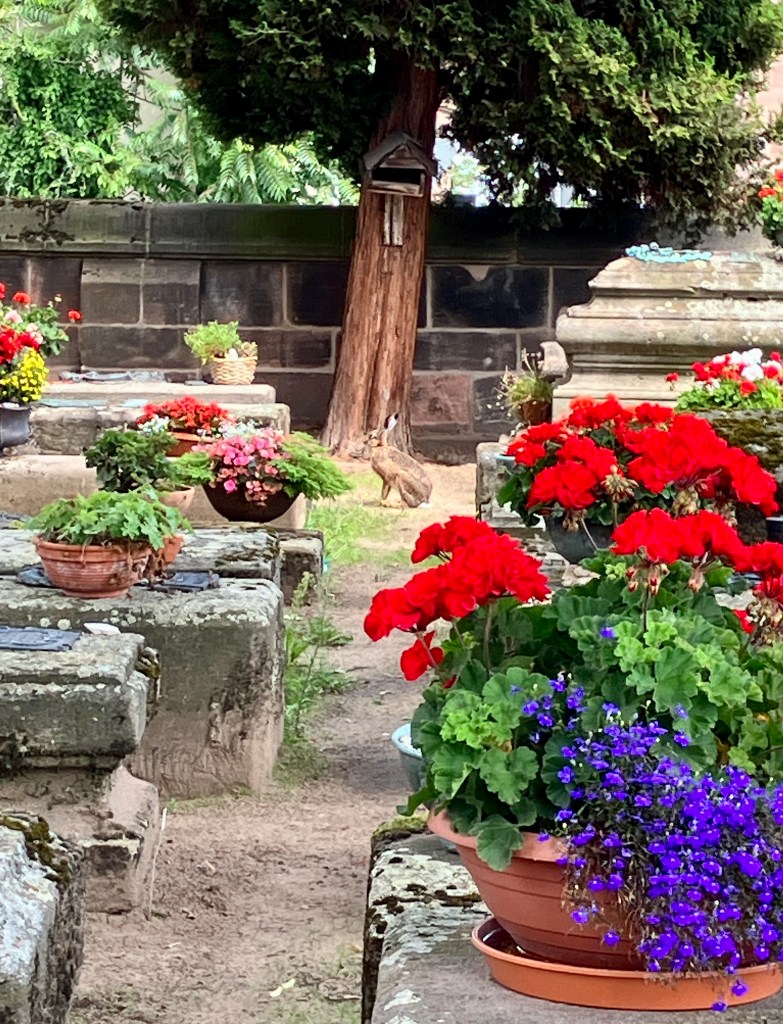
Once again, I abandoned my suitcase amongst the graves and followed the hare like Alice and the white rabbit, and I managed to take this photo as it paused, which shows how large it was compared to the height of the graves. The hare bounded off again a moment later and I followed it round the side of the small medieval church that can be seen in the back of the photo of Dürer’s grave, and I then almost collided with a sombre funeral procession that was coming out the door round the corner. I ran back, scared of being shouted at for careering into a solemn ceremony, and when I looked back around, the hare was gone.
I retreated back along the path towards Dürer’s tombstone, to collect my discarded suitcase. I’d never seen a hare in real life before; I’d assumed they lived in forests, leaping across meadows, to be captured on camera at dawn by wildlife photographers. I’ve used some footage of a hare doing exactly that in my film Oh Ill Thief (2019 – 2022), the project that explores the 1662 confessions of Highland woman Isobel Gowdie; she describes spells that her and her fellow witches used in order to take the shapes of hares, as well as those of cats and rooks, and the nocturnal violence they would then enact in those guises.

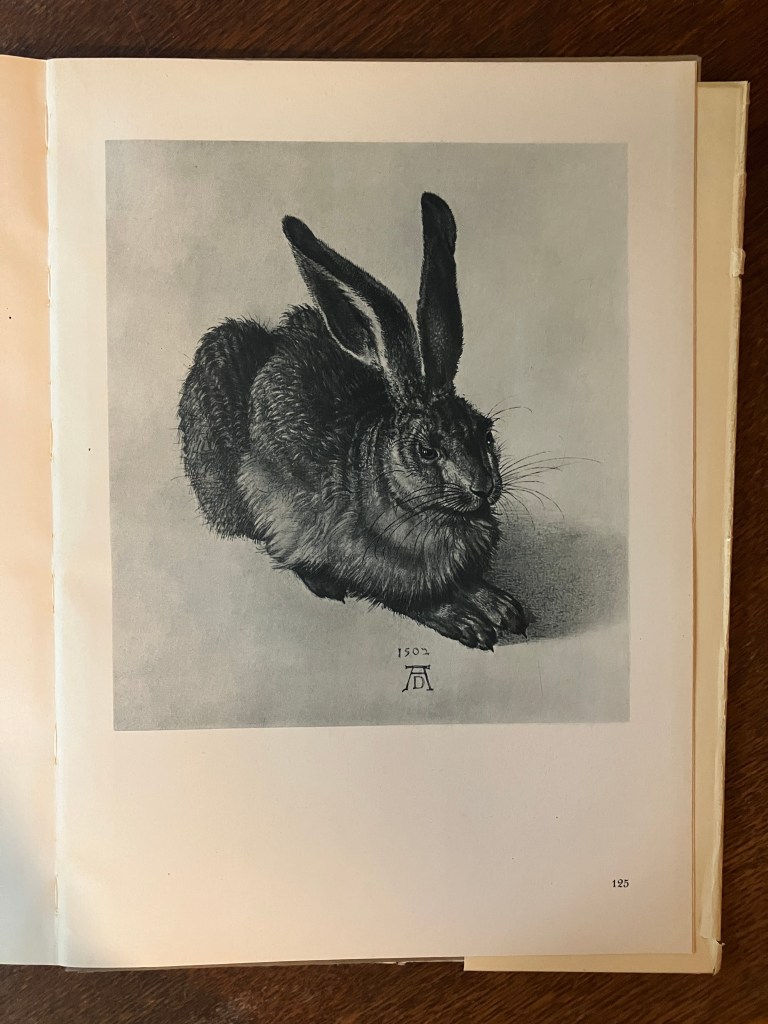
Quite hot and overwhelmed, I then sat down for a while and considered the apparition of the hare. I felt like something had happened that other people would perhaps call a spiritual experience; it was a nice feeling but also decidedly uncanny, as the artistic legacy of Dürer is almost inseparable from the image of a hare. Dürer’s hare is one of the most iconic works in the history of Western art, a deceptively simple study of watercolour and gouache on paper. Layers and layers of soft colour and scratchy line, suggestion of nerves and muscle underneath the skin, and above the skin the complex fur, contrasting textures lying in different directions, a masterpiece of minute observation and skill; no one is really sure how he managed it. No matter the depth of detail, however, the hare never loses its twitching liveliness, remaining a sharp and sinewy malevolent presence, with the shadowy eyes of an eldritch creature. Dürer was 30 when he painted his hare, the age I just turned this year.
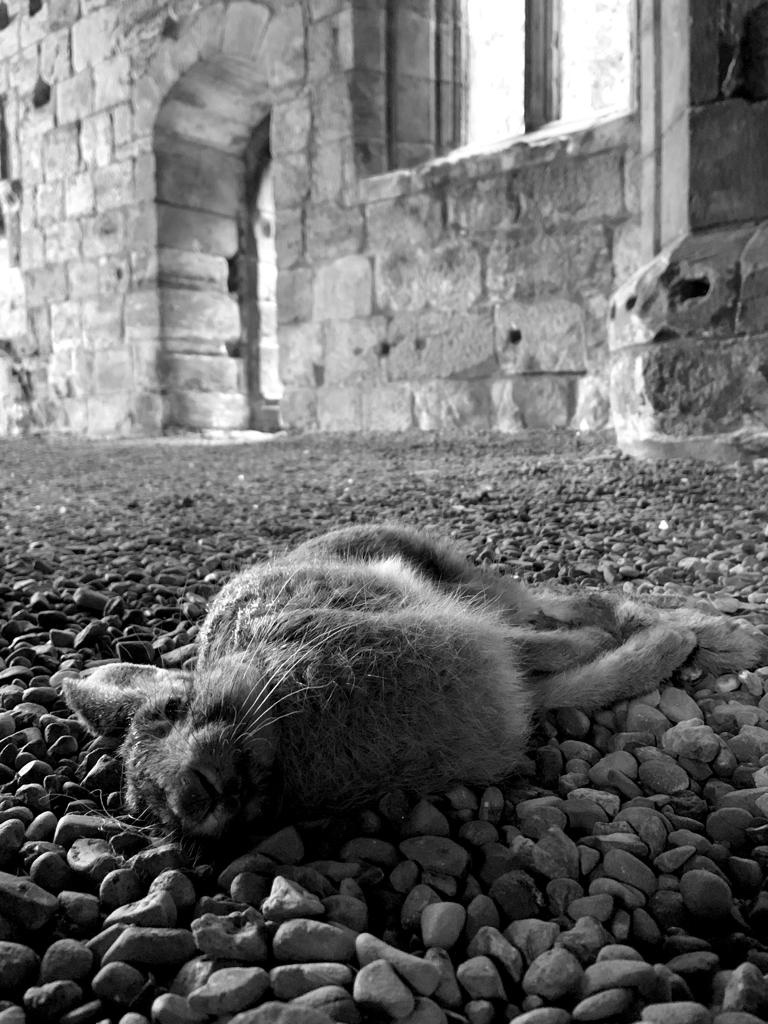
When I related my unheimlich experience to the other artists in the residency cohort, Pippa came forward with an eery hare story of her own. When she was attending a wedding at an old church in rural Scotland, she returned the morning after the festivities to photograph the atmospheric ruins. At some point between the end of the wedding party the night before and her arrival the next morning, a hare had come to the scene and died perfectly. It was as if the animal had anticipated an appreciative audience to their elegant death; or they had come to deliver a mysterious message, something not quite a blessing or a curse but maybe an ironic insinuation; the newly-wed couple were divorced less than a year later.
At a ruined church in rural Scotland and in the pages of a witch confession; we can expect hares to turn up there. Not so much on a sunny afternoon in the middle of a city; though at the grave of a medieval artist, then the hare becomes appropriate again. The spirit of a witch lives in that hare. The spirit of a witch who was maybe Albrecht, who perhaps sold his soul to the Devil in exchange for his prodigious talent, and ended up trapped in a hare haunting a graveyard. A dark contrariness accompanies the hare, almost humorous. A ruined marriage, a gate-crashed funeral. An encounter which sets the tone for the rest of my time in Bavaria.
* I have now been made aware that there is the Leonardo da Vinci airport in Italy. However, this is also a late medieval/Renaissance artist who was contemporaries with Albrecht so the fun point still stands.
 Sertraline Dreams
[…] Ill Thief’, after an uncanny interaction with a hare in a Nuremberg graveyard (the subject of this blog post written while on the residency). This project had become a film in 2019; now, inspired by the […]
LikeLike